Open your mind scientifically.
A thorough guide to microdosing with psilocybin – what it is, how it is practised, and what the global research shows as of 2026.
Strictly informational · Not medical advice
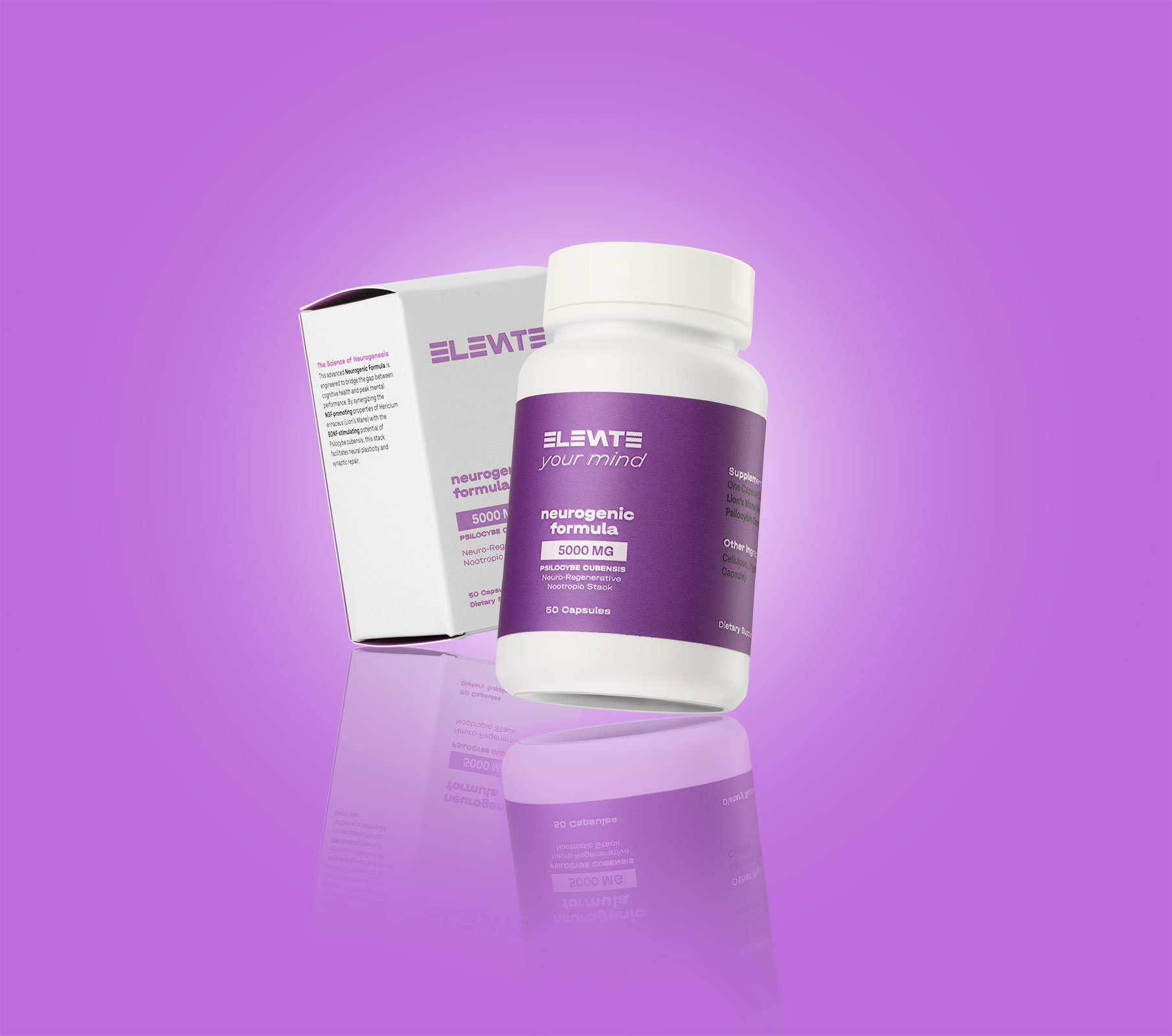
What is microdosing?
Microdosing involves taking very small, sub-perceptual doses of psilocybin – regularly over time. The dose is low enough that no hallucinations or noticeable psychedelic effects are experienced.
A typical microdose represents 5–10% of a full dose, usually between 0.1 and 0.3 grams of dried mushroom. The goal is subtle improvements in mood, focus and emotional flexibility.
The practice was popularised by psychologist James Fadiman in the 2010s, and is today the subject of growing scientific interest worldwide.
Common Protocols
All protocols share the principle of rest days – to prevent tolerance build-up and give the brain time to integrate.
Dose one day, two days off. Repeated over 4–8 weeks. Simple to follow and well documented through self-reported studies with thousands of participants.
4 days on, 3 off. Combined with lion’s mane and niacin. More intensive than Fadiman – the combination is intended to stimulate neuroplasticity.
Every other day – easier to remember. Some prefer it for a more consistent effect, but it may build tolerance faster than the Fadiman protocol.
What do users say?
Based on self-reported experiences from large observational studies. A clear distinction is made between positive and negative reported effects.
Focus & Concentration
Many report being able to sustain focus for longer periods and experiencing fewer distractions at work and during studies.
Improved Mood
Reduced symptoms of anxiety and depression are among the most consistently reported positive effects across studies.
Creativity
An increased ability to make new connections and solve problems in unconventional ways – particularly noted in creative professions.
Emotional Openness
Increased empathy and social presence is reported by many – especially among those who dose early in the morning.
Discomfort on Dose Days
Some report headaches, nausea or mild anxiety – particularly when the dose is too high or timing during the day is off.
Sleep Disruption
Dosing late in the day can interfere with sleep. All protocols recommend dosing early in the morning.
What does the research say?
The research is still in its early stages. Many studies are pre-registered and ongoing. Here are some of the most cited findings to date.
A double-blind study with 191 participants showed improvement in both groups, highlighting the importance of controlled trials in this field.
Observational study with 4,000+ participants. Findings were consistent, though self-selection bias remains an important methodological limitation.
Applies to full doses in clinical settings, not microdosing – but illuminates psilocybin’s broader therapeutic potential.
An important counterweight to enthusiastic self-reports. Context and “set and setting” likely play a significant role in perceived effects.
Important Considerations
Contraindications
- Personal or family history of psychosis, bipolar disorder or schizophrenia
- Use of SSRIs, SNRIs or lithium – serious interaction risk
- Pregnancy or breastfeeding
- Unstable mental health without medical supervision
- Activities with zero tolerance for cognitive impairment (driving, surgery)
Legal Status
- Psilocybin is a Schedule I controlled substance in most countries – possession and use is illegal
- The Netherlands has partially decriminalised psilocybin truffles
- Oregon, USA legalised therapeutic use in regulated clinical settings in 2023
- Australia permits therapeutic use under psychiatric supervision from 2023
- Research is ongoing globally under strict ethical and legal frameworks
Get in touch
Have questions about the content on this site, interested in academic collaboration, or simply want to reach out? Fill in the form and we’ll get back to you as soon as possible.
Important Information
This site is strictly informational and does not constitute medical advice. Nothing here should be interpreted as an encouragement of illegal activity. Psilocybin is a controlled substance in many jurisdictions. Always consult a qualified healthcare professional regarding questions about mental health.